


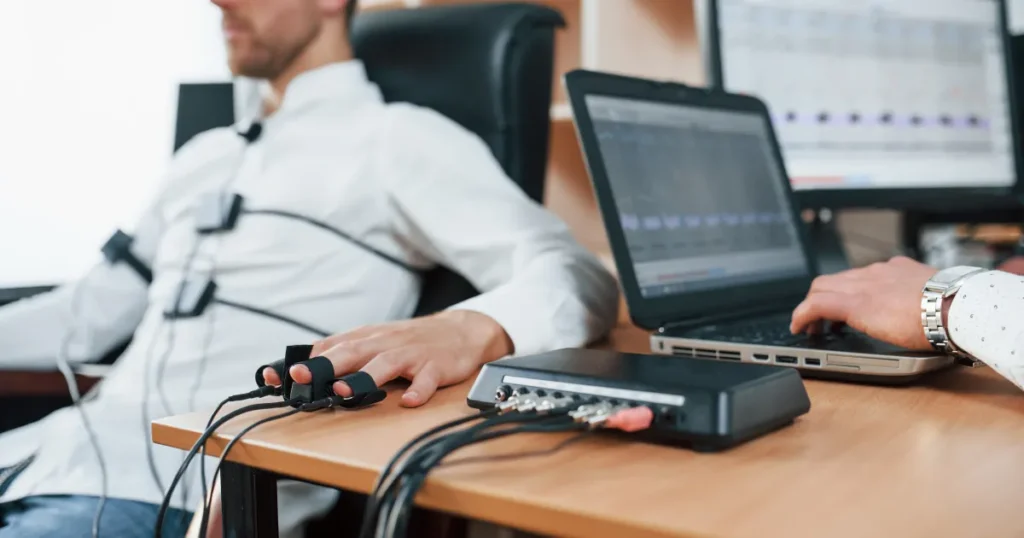
The question of whether a lie detector can be fooled appears almost every time people discuss polygraph testing. Popular culture often presents two opposite ideas. One says the machine is nearly impossible to beat. The other says any calm or prepared person can mislead it without much effort. Both views simplify a process that is more technical and more limited than most people assume. A polygraph does not detect lies directly. It records physiological responses and uses a structured comparison of reactions to different types of questions.
That matters because the conversation is often built around the wrong image of the device. People tend to imagine a system that sees hidden truth in direct form, and the same kind of overconfidence appears in other fast-moving decision environments where signals are mistaken for certainty, whether in risk judgment, reputation reading, or even activity on an ipl betting website. A polygraph is not a mind-reading machine, but it is also not a toy that can be defeated by one simple trick. To understand whether it can be fooled, it is necessary to separate myth, technical reality, and the role of the examiner.
What the Polygraph Actually Measures
A polygraph records physical changes that may occur when a person answers questions under controlled conditions. These often include breathing patterns, cardiovascular changes, and skin conductivity. The key point is that the machine measures response, not deception itself.
The entire method depends on comparison. The examiner looks at how a person reacts to neutral questions, comparison questions, and relevant questions tied to the investigated issue. If the pattern around the relevant questions differs strongly enough, the result may be interpreted as more consistent with deception or concealed knowledge. If the pattern does not show that difference, the result may be interpreted as more consistent with non-deception. Sometimes the result is simply inconclusive.
Because the method relies on comparison and interpretation, the question “Can it be fooled?” is really a question about whether reaction patterns can be altered enough to distort the comparison.
Why People Assume It Is Easy to Beat
The belief that the polygraph is easy to fool comes from two sources. First, many people know that stress does not equal lying. A truthful person may be nervous, while a deceptive person may feel controlled. Second, people hear claims that physical or mental tricks can change test outcomes.
These claims sound plausible because the polygraph does not measure truth directly. If it records bodily reactions, then it seems reasonable to think that deliberate control of those reactions could change the result. At a broad level, that logic is not completely wrong. The difficulty lies in moving from possibility to reliability. Influencing a human-guided testing process in a dependable way is far more difficult than people assume.
What Does Not Deserve the Reputation It Has
Many alleged ways of fooling a lie detector are discussed as though they produce stable results. In reality, most of them are overstated. General calmness, confidence, or rehearsed self-control do not automatically defeat the test. A person may feel composed and still show response patterns that become meaningful in comparison. Likewise, general nervousness does not automatically cause failure.
Another overstated idea is that one simple physical or mental trick can reliably distort the entire examination. This belief ignores how structured testing works. The procedure usually includes repeated question sets, comparison logic, and examiner observation of consistency. A tactic that sounds clever in theory may produce unstable or suspicious patterns rather than a clean result. In other words, many so-called methods are better at increasing noise than at creating a trustworthy false outcome.
This does not mean the polygraph is impossible to influence. It means that common claims about easy success are weak.
What Really Affects Results
If the public asks the wrong question, the better question is this: what actually affects polygraph results? Several factors matter more than the dramatic myths.
First, question quality matters. If the questions are vague, emotionally loaded, or poorly framed, the result becomes less stable and easier to misread. Second, examiner skill matters. The polygraph is not only equipment. It is a procedure shaped by pre-test interview quality, wording, pacing, and interpretation. Third, subject condition matters. Fatigue, medication, health status, emotional strain, and confusion can all influence recordings.
These factors do not “beat” the test in the cinematic sense. But they do affect how useful or limited the test becomes. This is important because the biggest weakness of the polygraph is often not dramatic sabotage. It is ordinary procedural and human complexity.
Can Deliberate Countermeasures Matter?
At a high level, deliberate countermeasures can matter in principle because the test depends on physiological comparison. But moving from “can matter” to “works reliably” is a major leap. Most discussions skip that gap.
In practice, a polygraph is not a single question with one direct reading. It is a controlled series of comparisons interpreted by a trained examiner. Deliberate attempts to manipulate the process may create patterns that are inconsistent, implausible, or difficult to score cleanly. Even when they alter the data, that does not mean they produce a successful false result. Sometimes they make the outcome inconclusive. Sometimes they raise concern about artificial interference rather than helping the subject appear truthful.
So the most accurate answer is that intentional influence is possible as a concept, but the idea of a dependable, low-risk method is greatly exaggerated. There is a difference between affecting a process and controlling its conclusion.
What the Polygraph Is Most Vulnerable To
The polygraph is often thought to be most vulnerable to secret tricks. In reality, it may be more vulnerable to ordinary limitations of the method itself.
The biggest vulnerabilities usually include:
- overconfidence in interpretation
- poor question design
- weak case selection
- treating the result as final proof
- using the test on broad emotional disputes instead of narrow factual issues
These are structural weaknesses, not dramatic acts of deception. A poorly designed examination can produce doubtful value even if no one tries to interfere. A good examination on a narrow factual issue is more resilient, not because the method becomes perfect, but because the comparison has a clearer foundation.
This is why the question of fooling the test cannot be separated from the quality of the testing process itself.
What Works and What Doesn’t — The Real Answer
If the phrase “what works and what doesn’t” is interpreted honestly, the answer is more restrained than people expect.
What does not reliably work is the fantasy of one simple tactic that guarantees success. Claims of effortless control, universal calmness, or one-size-fits-all manipulation do not match the complexity of actual testing. These ideas survive because they are easy to tell and easy to believe.
What does work, in the sense of truly shaping the value of the result, is not secret technique but method. Clear questions, proper case selection, disciplined interpretation, and realistic expectations all matter. On the other side, weak methodology, vague questions, and misplaced confidence can reduce reliability more than any dramatic trick described in rumor.
That means the most honest conclusion is also the least cinematic one: the polygraph can be limited, influenced, and sometimes undermined, but not in the simple, controllable way public myth suggests.
Why the Final Result Should Never Stand Alone
Whether or not a lie detector can be fooled becomes less dangerous as a question when the result is treated correctly. The real problem appears when people treat a polygraph outcome as automatic truth. If a deceptive result is seen as final guilt, or a non-deceptive result as complete innocence, the process is being asked to do too much.
A polygraph is best used as one element in a broader inquiry. Records, timelines, witness statements, access logs, financial data, and direct evidence remain essential. The test may help focus attention, narrow uncertainty, or support further questioning. It should not replace real investigation.
This point matters because even a strong examination remains an interpretive tool, not a machine of final judgment.
Conclusion
Can the lie detector be fooled? The most accurate answer is yes in theory, but not in the simple, reliable, and almost magical way people often imagine. The polygraph is neither unbeatable nor easily defeated by common myths about calmness or one clever tactic. Its results are shaped by question design, examiner skill, subject condition, and the broader context of the case.
What truly “works” is not a secret formula for beating the test. What works is good method, narrow factual focus, and disciplined interpretation. What does not work is the fantasy that the polygraph is either a perfect truth machine or a device anyone can fool at will. The reality sits in the middle: limited, useful in some cases, vulnerable in others, and always dependent on how responsibly it is used.